Network analysis of feedback loops that refine accuracy metrics in global athletic outcome advisory systems
Iris Koch · Aug 18, 2026

Network analysis of feedback loops that refine accuracy metrics in global athletic outcome advisory systems
Global athletic outcome advisory systems rely on interconnected data networks that process results from leagues, circuits, and international events to generate projections, and network analysis techniques map these connections to identify where feedback loops strengthen or weaken overall metric precision. Researchers track how information flows between nodes representing teams, athletes, venues, and historical datasets, revealing patterns that influence prediction reliability across multiple disciplines.
Core Components of Network Structures in Advisory Platforms
Advisory platforms aggregate inputs from diverse sources including live event feeds, injury registries, and performance archives, then distribute refined outputs to users through layered verification stages. Observers note that these structures function as graphs where edges represent data exchanges and nodes capture specific athletic variables, allowing analysts to measure centrality and clustering coefficients that correlate with improved forecast stability. Data indicates that platforms handling both seasonal leagues and circuit-based events maintain denser connections during peak competition periods, which in turn supports faster propagation of accuracy adjustments.
Mechanics of Feedback Loops and Metric Refinement
Feedback loops operate when outcome discrepancies trigger updates to underlying models, and network analysis quantifies the speed and reach of these corrections across the system. Experts have observed that closed loops, where verified results cycle back to initial selectors within defined time windows, reduce variance in subsequent projections by measurable percentages according to longitudinal tracking studies. In August 2026, several platforms reported accelerated loop closure times following integration of real-time sensor data from major tournaments, demonstrating how temporal compression of feedback enhances metric consistency without requiring manual intervention at every stage.
Turns out the most effective loops combine automated anomaly detection with human-curated validation checkpoints, creating hybrid pathways that prevent error amplification while preserving adaptability to schedule disruptions or roster changes. Researchers discovered that systems employing multi-hop feedback, where corrections travel through intermediate analytical layers before returning to source models, achieve higher precision rates in events spanning both team and individual formats.
Global Scale Applications and Cross-Regional Data Flows
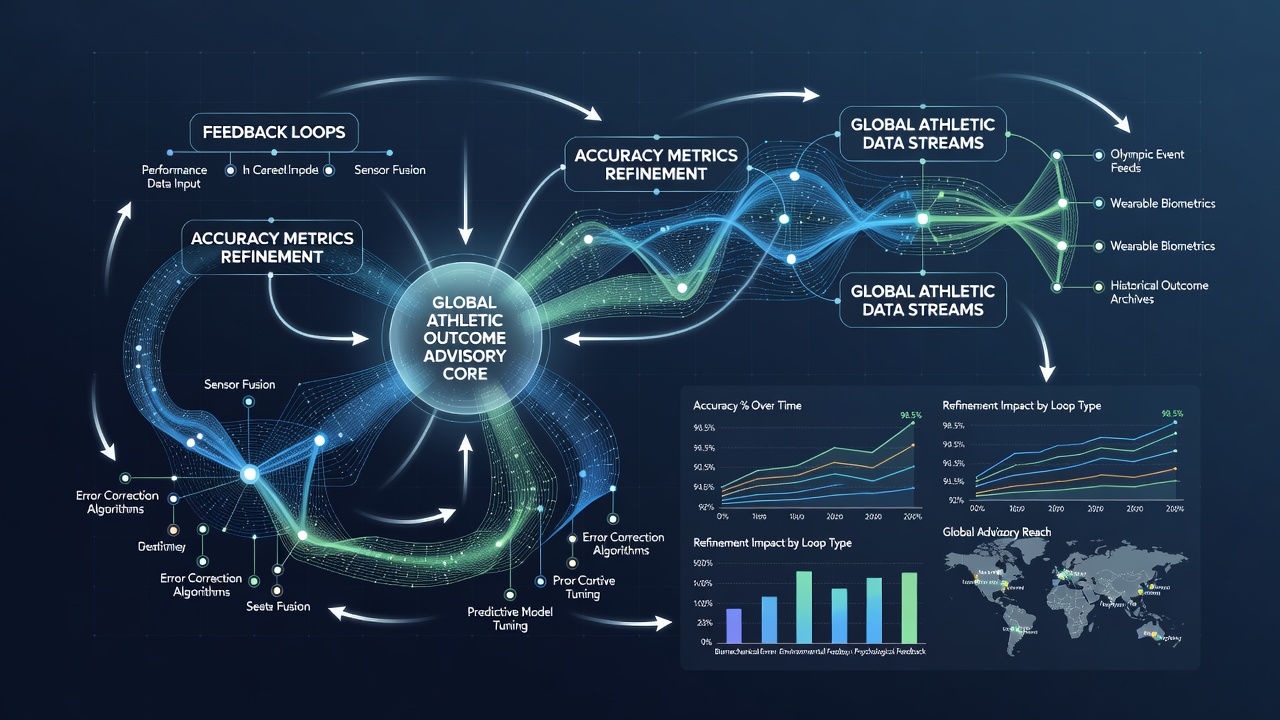
Networks spanning multiple continents must account for varying data standards and reporting cadences, yet analysis shows that standardized protocols allow feedback to traverse regional boundaries efficiently. A World Athletics research compilation outlines how outcome datasets from track and field circuits integrate with league-based soccer records to refine shared accuracy benchmarks. Those who've studied cross-border flows note that platforms operating in August 2026 benefit from synchronized update cycles that align northern and southern hemisphere seasons, reducing latency in metric adjustments.
Evidence suggests that clustering algorithms applied to these global graphs identify influential hubs, such as major tournament databases, whose refinement signals propagate widely and lift baseline accuracy for peripheral nodes. Industry reports from the Australian Sports Commission further detail how equine and motor-racing circuits contribute distinct variable sets that enrich the overall network topology when incorporated through verified channels.
Verification Protocols and Their Network-Level Impacts
Verification protocols embedded within advisory ecosystems use iterative sampling to confirm projection fidelity, and network analysis maps which protocol variants produce the strongest downstream effects on accuracy metrics. Analysts have mapped directed graphs where protocol success rates determine edge weights, revealing that high-fidelity verification nodes exert disproportionate influence on the stability of forecasts for both high-profile and niche athletic events. Platforms that route verification through redundant pathways demonstrate lower susceptibility to isolated data gaps, a pattern confirmed in multiple case examinations of multi-sport advisory operations.
What's interesting is how adaptation triggers, detected through shifts in network modularity, prompt automated recalibration of feedback priorities. Observers note that during periods of concentrated schedule changes, such as overlapping league and circuit calendars, the systems dynamically strengthen connections to the most reliable verification sources to maintain metric integrity.
Conclusion
Network analysis continues to illuminate the pathways through which feedback loops refine accuracy metrics in global athletic outcome advisory systems, providing structured methods for tracing data influence and correction propagation. Ongoing developments in graph-based modeling, combined with expanding data sources from international competitions, support incremental gains in projection reliability across athletic disciplines. As platforms evolve through 2026 and beyond, the emphasis remains on mapping these dynamic networks to sustain verifiable improvements in outcome advisory performance.