Integration of Live Data Streams That Refine Selection Protocols Among Advisors Handling Team Sports and Track Events
Casey Richter · Aug 23, 2026
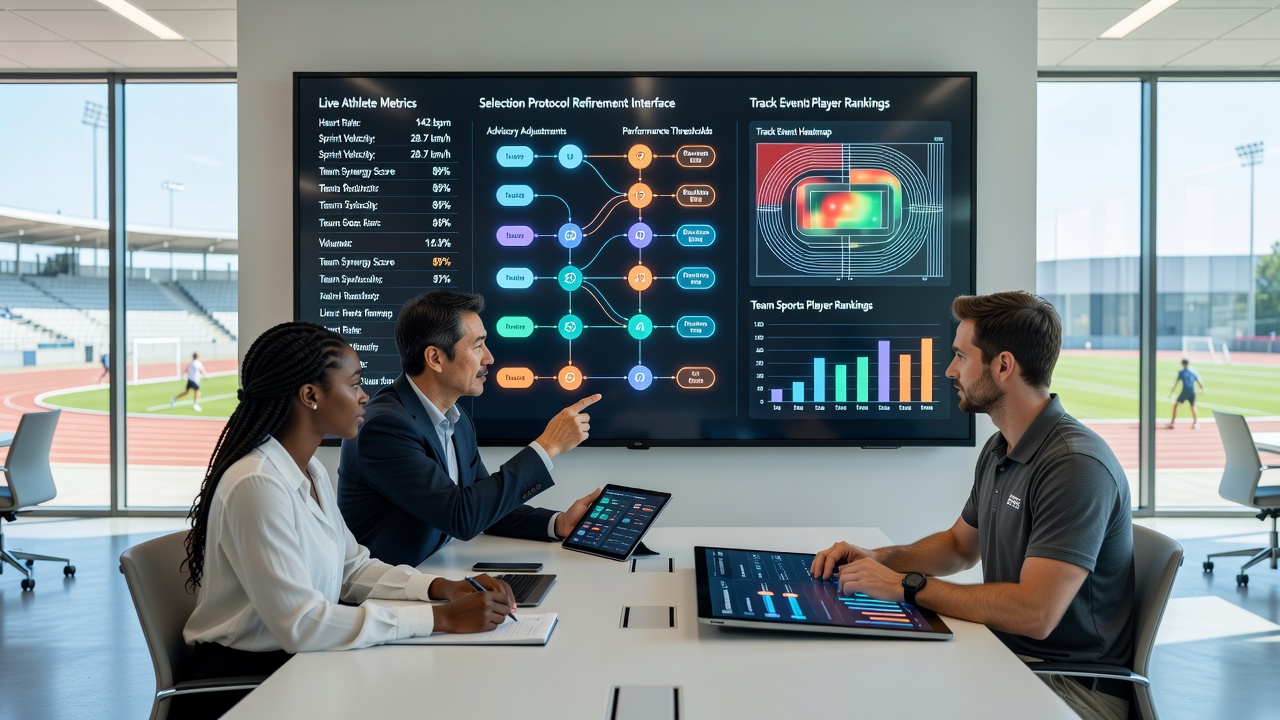
Integration of Live Data Streams That Refine Selection Protocols Among Advisors Handling Team Sports and Track Events
Advisors working with team sports and track events have incorporated live data streams into their workflows over the past decade, and systems now pull information from multiple sensors, cameras, and official feeds simultaneously. These streams include player positioning metrics, heart rate variability, weather conditions on outdoor tracks, and instant updates from governing bodies that cover everything from substitution patterns in soccer to stride length changes in sprint events.
Data Sources Driving Protocol Adjustments
Multiple organizations compile these inputs into centralized platforms that advisors access through secure portals, while protocols adjust based on thresholds set for performance indicators such as acceleration bursts in basketball or pace consistency in distance races. Research from the Australian Sports Commission shows that integration of GPS and optical tracking has increased the frequency of protocol reviews from weekly to near-daily cycles in many advisory groups handling both team and individual disciplines.
Selection protocols themselves consist of layered filters that prioritize certain variables depending on the event type, and live streams allow these filters to recalibrate automatically when new data arrives. For instance, a sudden shift in track surface temperature detected by embedded sensors can trigger reweighting of speed versus endurance factors in equine or human track forecasts, whereas team sport advisors might see defensive formation probabilities updated after each possession in real time.
Implementation Across Disciplines
Team sports generate high volumes of structured data from league systems that record every pass, tackle, and set piece, while track events rely more on biomechanical feeds and timing chips that capture split-second variations. Observers note that advisors handling both categories often maintain parallel dashboards because the data cadence differs: continuous in basketball or soccer quarters, and event-specific in 100-meter heats or steeplechase laps.

During August 2026, several major circuits and leagues scheduled overlapping competitions that required advisors to toggle between datasets rapidly, and platforms responded by adding unified APIs that combined league play-by-play with circuit timing logs. This allowed selection protocols to incorporate cross-context variables such as recovery intervals between back-to-back events or cumulative workload from midweek fixtures.
Protocol Refinement Mechanisms
Refinement occurs through iterative weighting adjustments that algorithms apply once incoming streams exceed preset deviation limits, and experts at institutions like the University of Queensland have documented how these adjustments improve forecast alignment with actual outcomes in controlled studies. Advisors review flagged discrepancies at set intervals, yet the live component reduces the lag between observation and protocol update from days to minutes in many documented cases.
Networked validation adds another layer because multiple advisors contribute feedback on the same streams, which sharpens the collective thresholds used for future selections. Data from NCAA analytics programs indicate that groups sharing verified live inputs across team and track portfolios recorded fewer protocol overrides during high-variance periods such as playoff stretches or championship meets.
Challenges in Stream Integration
Compatibility between proprietary league systems and open track timing databases remains an ongoing technical issue, although middleware solutions have narrowed the gap in recent seasons. Bandwidth constraints at remote track venues can interrupt streams that urban team sport venues rarely experience, and advisors have responded by building fallback protocols that rely on delayed aggregates when primary feeds drop.
Privacy regulations in various jurisdictions also shape how granular the live data can be, with some regions restricting access to individual biometric streams while permitting aggregate team or heat-level metrics. Those who manage advisory platforms must therefore maintain region-specific compliance layers that filter streams before they reach the selection algorithms.
Conclusion
Integration of live data streams continues to evolve the way advisors refine selection protocols for team sports and track events, with measurable effects on update frequency and variable weighting accuracy. As more competitions adopt standardized sensor formats and cross-platform APIs, the distinction between team and track data environments narrows further, enabling unified advisory systems that operate across both domains without manual reconciliation steps.